 +86-573-86868360
 การสอบถาม

In the world of heavy lifting and large-scale construction, the Crawler Crane Steel Structure Component stands as one of the most critical parts of modern engineering. These massive cranes rely on their steel framework to bear tremendous loads, maintain balance, and perform precise lifting tasks under diverse and often harsh working conditions. Ensuring the strength and reliability of every steel structure component is therefore not a matter of convenience—it’s a matter of safety, performance, and long-term operational integrity.
1. Understanding the Role of the Steel Structure Component
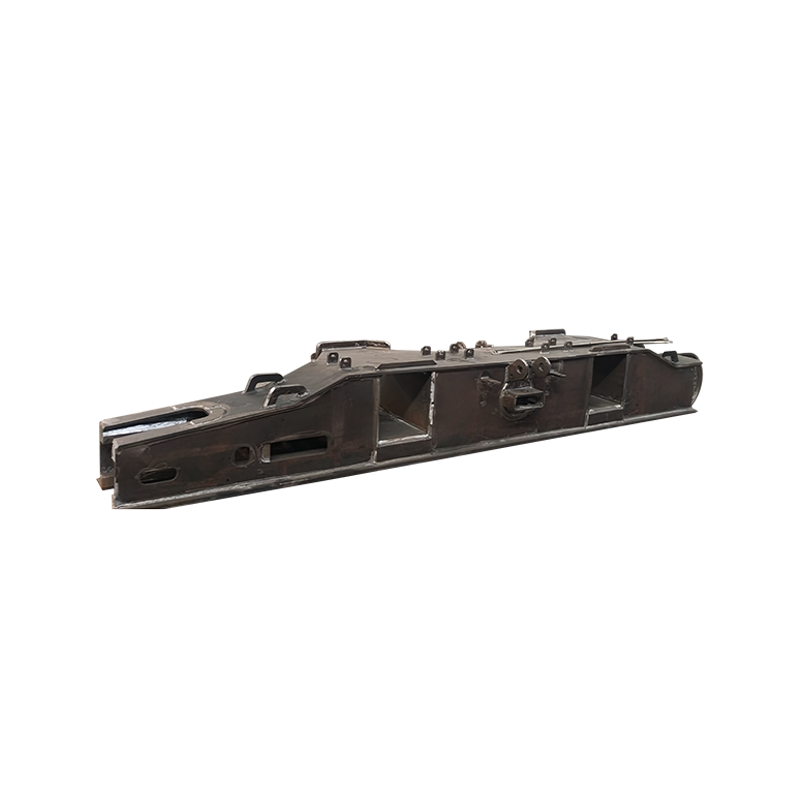
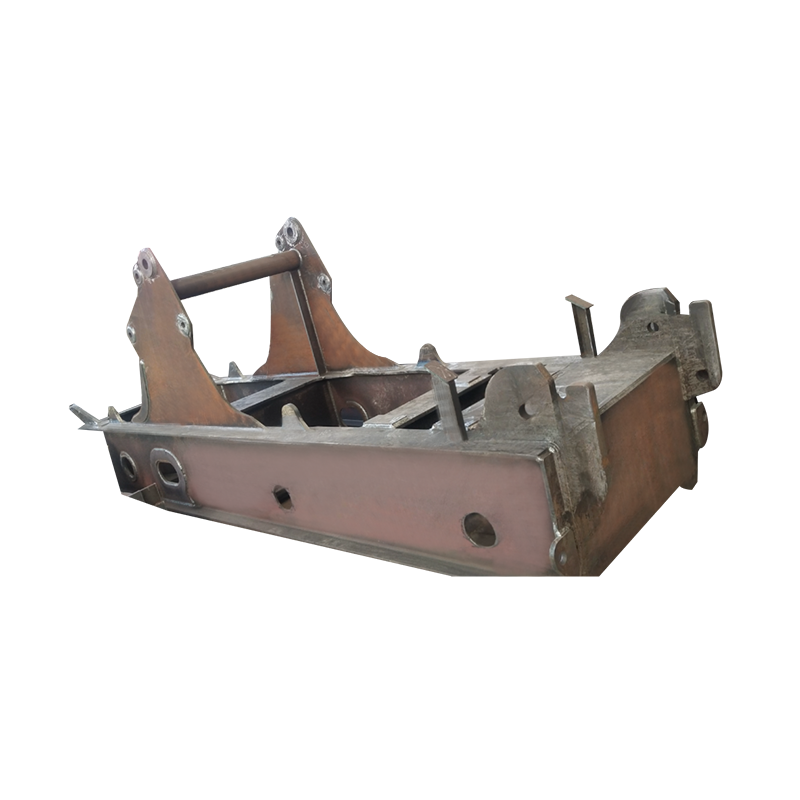
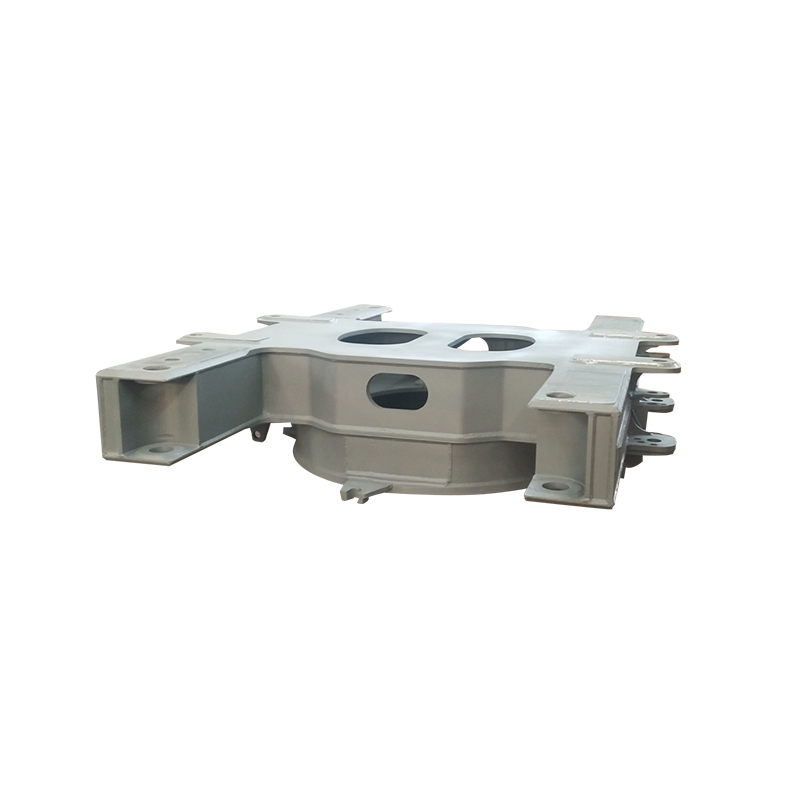
A crawler crane operates on a tracked base, giving it exceptional stability and mobility across various terrains. The steel structure components —which include the boom, mast, carbody, frame, and counterweight support—form the skeletal system that carries the crane’s load-bearing responsibilities.
Each of these components experiences complex forces, such as:
- Tensile stress from lifting heavy loads.
- Compressive forces on supporting members.
- Shear and bending moments during movement and operation.
- Fatigue stresses from repetitive lifting cycles.
The structural design must therefore ensure that each steel component maintains strength under combined and fluctuating loads, without yielding, buckling, or cracking over time.
2. The Foundation: Engineering Design Principles
2.1 Structural Analysis and Load Modeling
Engineers begin by developing detailed finite element models (FEM) of the crane’s steel structure. These digital simulations allow them to predict how the structure will behave under real-world loading conditions. The FEM process breaks the crane’s geometry into small elements and calculates the stresses, strains, and deformations across each.
Through load modeling, engineers simulate:
- Static loads (e.g., self-weight and lifted material).
- Dynamic loads (e.g., acceleration, braking, and wind).
- Impact loads (e.g., sudden motion or ground contact).
This phase identifies potential weak points, ensuring that stress concentrations are minimized and the structure can sustain operational forces without structural failure.
2.2 Safety Factors and Design Codes
Crawler cranes are designed following stringent international standards such as EN 13000 , ISO 9927 , and FEM 1.001 . These standards dictate allowable stress limits, design margins, and inspection requirements.
Engineers apply safety factors —multipliers added to design calculations—to account for uncertainties in loading conditions, material variability, and human operation. For example, a safety factor of 1.5 to 2.0 might be applied to ensure the component’s strength exceeds the maximum expected load.
3. Material Selection: Choosing the Right Steel
The strength of a Crawler Crane Steel Structure Component depends heavily on the properties of the steel itself. Engineers carefully choose materials that offer the optimal balance between strength, ductility, weldability, and resistance to fatigue and corrosion .
3.1 High-Strength Low-Alloy (HSLA) Steel
HSLA steels are commonly used in crane structures due to their superior yield strength and toughness. They achieve strength through microalloying elements such as niobium, vanadium, and titanium.
These steels not only reduce the overall weight of the crane but also improve structural performance by enhancing the load-to-weight ratio.
3.2 Heat Treatment and Microstructure Control
Engineers ensure consistency in mechanical properties by employing controlled heat treatment processes such as normalizing, quenching, and tempering. Heat treatment refines the steel’s grain structure, improving its resilience to fatigue and stress cracking.
Additionally, non-destructive microstructure analysis ensures that steel components meet the required toughness even under extreme cold or fluctuating temperature conditions often encountered on construction sites.
4. Precision Fabrication Techniques
Design and material choice lay the foundation, but true strength is realized during fabrication . The assembly of the steel structure requires precision engineering to maintain alignment, joint integrity, and stress distribution.
4.1 Welding and Joint Design
Welding is one of the most critical steps in fabricating a Crawler Crane Steel Structure Component . Improper welding can create residual stresses, weak joints, or deformation.
Engineers therefore rely on:
- Automated welding systems for consistency.
- Preheating and post-weld heat treatment (PWHT) to reduce stress concentrations.
- Ultrasonic testing (UT) and radiographic testing (RT) to detect internal flaws.
Each weld is designed based on load path analysis to ensure it doesn’t become the weak link in the structure.
4.2 Dimensional Accuracy and Alignment
During fabrication, geometric tolerances are carefully controlled using precision jigs and fixtures. Even minor misalignment can lead to uneven stress distribution, reducing the component’s load capacity. Engineers use laser measurement tools to verify accuracy before final assembly.
4.3 Surface Treatment
Once fabricated, components are treated with protective coatings —zinc-rich primers, epoxy paints, or galvanic coatings—to shield against corrosion. This ensures the steel’s strength is preserved over years of outdoor exposure and operation in humid or coastal environments.
5. Quality Assurance and Testing
Ensuring the strength of a Crawler Crane Steel Structure Component doesn’t end at design or fabrication. Rigorous testing and inspection protocols are applied to validate that each component meets the expected performance standards.
5.1 Non-Destructive Testing (NDT)
To detect flaws without damaging the component, engineers use various NDT methods, including:
- Ultrasonic Testing (UT): Detects internal cracks or voids.
- Magnetic Particle Testing (MT): Identifies surface and near-surface defects.
- Radiographic Testing (RT): Uses X-rays to check weld integrity.
- Dye Penetrant Testing (PT): Highlights surface discontinuities on smooth materials.
These techniques collectively ensure no structural weaknesses remain undetected.
5.2 Static and Dynamic Load Testing
After fabrication, prototype components often undergo load tests . Engineers apply static loads up to 125% of the rated capacity to confirm strength and stiffness. Dynamic tests simulate real lifting cycles, helping verify fatigue performance under repetitive stress.
5.3 Dimensional and Visual Inspections
Every fabricated piece is visually inspected for surface irregularities, alignment errors, and coating defects. Dimensional verification ensures that all connections align perfectly during crane assembly, maintaining uniform stress distribution across the structure.
6. Fatigue and Life-Cycle Evaluation
Unlike static structures, cranes experience cyclic loading , where stresses are repeatedly applied and released. Even when loads remain below the steel’s yield strength, these cycles can eventually cause fatigue cracks.
Engineers use fatigue analysis tools to predict the expected service life of a Crawler Crane Steel Structure Component. They consider parameters such as:
- Number of operational cycles per day.
- Load magnitude and frequency.
- Environmental exposure (temperature, moisture, and chemical atmosphere).
Modern cranes incorporate structural health monitoring systems —sensors embedded in critical joints—to continuously track strain and vibration. This allows predictive maintenance, detecting fatigue before it leads to failure.
7. Advanced Simulation and Optimization
Recent technological advances have transformed how engineers ensure structural strength. Computer-aided design (CAD) and finite element analysis (FEA) now allow unprecedented accuracy in modeling stress behavior.
Through iterative design optimization, engineers can reduce material usage without compromising safety. Advanced simulations consider nonlinear behaviors such as plastic deformation, buckling, and material anisotropy—providing a more realistic understanding of component performance.
Moreover, digital twin technology is gaining ground. By creating a virtual replica of the crane’s steel structure, engineers can monitor performance in real time, identify weak zones, and plan structural upgrades or reinforcements.
8. Maintenance and Periodic Inspection
Even the strongest design can deteriorate over time if not properly maintained. Regular inspection and maintenance are essential to sustaining the strength of a Crawler Crane Steel Structure Component .
8.1 Routine Inspections
Operators and maintenance teams perform scheduled inspections to detect corrosion, cracks, or deformation. Visual checks, combined with NDT scans, help identify potential issues before they escalate.
8.2 Repainting and Surface Renewal
Periodic surface renewal—such as reapplying protective coatings—guards against corrosion, particularly in humid or salt-rich environments.
8.3 Record Keeping and Data Analysis
Maintenance data are systematically recorded to track structural performance over time. Any anomalies in stress readings, vibrations, or wear patterns prompt detailed engineering reviews.
9. Sustainability and Future Developments
As industries shift toward sustainability, the focus on recyclable and high-performance steel alloys has grown. Engineers are exploring lightweight yet ultra-strong materials that reduce environmental impact without compromising safety.
Future Crawler Crane Steel Structure Components may integrate carbon fiber reinforcements, smart sensors, and predictive AI-based monitoring to ensure strength dynamically throughout the crane’s operational life.
Conclusion
The strength of a Crawler Crane Steel Structure Component is not an accident—it’s the result of meticulous engineering discipline, precise material selection, advanced manufacturing, and rigorous quality control.
From the earliest design calculations to the final inspection on the assembly floor, every step aims to guarantee that each component can endure immense stress while maintaining its integrity. By combining traditional engineering principles with modern digital technologies, today’s crawler cranes achieve remarkable reliability, efficiency, and safety—lifting not just heavy loads, but the standards of structural engineering itself.